China Walks Diplomatic Tightrope as Middle East War Disrupts Economy and Energy Strategy
China is navigating economic risks and diplomatic challenges as the Middle East conflict impacts oil prices, trade stability, and its strategic ties with Iran.
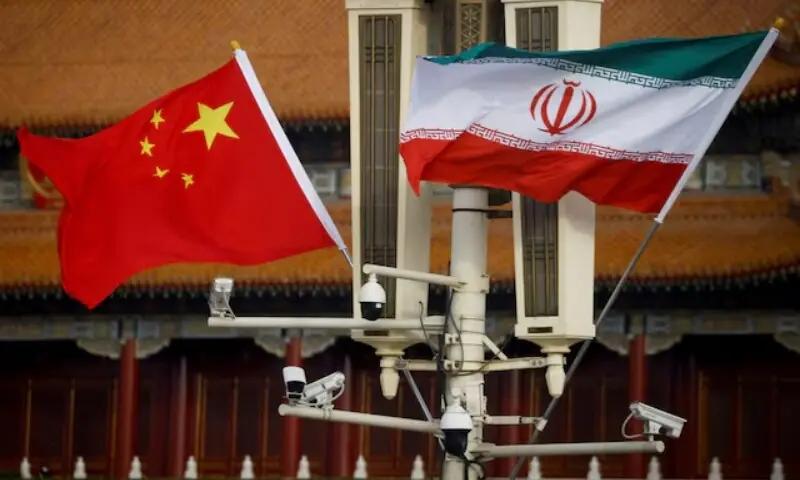
The national flags of China and Iran are displayed in Tiananmen Square, Beijing, on February 14, 2023. — Reuters/File
The ongoing conflict in the Middle East is beginning to impact China economically and diplomatically, as rising oil prices and regional instability test Beijing’s carefully calibrated foreign policy.
As the world’s second-largest economy, China is heavily exposed to disruptions in global energy markets. The conflict has already pushed up petrol and plastic prices domestically, highlighting the country’s reliance on imported energy and stable trade routes.
A Transactional Relationship with Iran
Despite being seen as part of a broader geopolitical bloc alongside Russia and North Korea, China’s relationship with Iran remains largely economic rather than strategic.
China is the primary buyer of Iranian oil, accounting for more than 80 percent of Tehran’s exports. However, Iranian crude represents only a small share of China’s overall imports, reflecting Beijing’s diversified energy strategy.
In contrast, China maintains significantly larger trade relationships with Gulf economies such as Saudi Arabia and the United Arab Emirates, both of which offer more stable and internationally integrated markets.
Limited Military Involvement
China has so far avoided direct military engagement in the conflict, even as tensions escalate between Iran, the United States, and Israel.
While Beijing has condemned acts that threaten regional sovereignty, it has also urged restraint from all parties. Analysts note that China’s leadership is unwilling to risk entanglement in a prolonged Middle Eastern conflict.
However, concerns remain over indirect involvement. Reports suggest Iran may be leveraging China’s BeiDou Navigation Satellite System for improved missile and drone targeting. Additionally, U.S. officials have accused Chinese firms such as SMIC of supplying sensitive technology to Iranian entities.
Diplomatic Efforts and Constraints
China has positioned itself as a proponent of diplomacy, calling for an immediate ceasefire and regional stability. Foreign Minister Wang Yi has engaged with key stakeholders, while special envoy Zhai Jun has conducted regional visits to de-escalate tensions.
Despite these efforts, China’s influence remains limited. Its neutral stance—avoiding direct criticism of Iran while opposing attacks on Gulf states—has placed Beijing in a delicate diplomatic position.
China previously demonstrated its regional influence by brokering a 2023 rapprochement between Iran and Saudi Arabia. However, recent attacks on Gulf infrastructure highlight the limits of its ability to shape outcomes on the ground.
Economic Risks and Strategic Opportunities
The conflict presents a mixed scenario for China. On one hand, prolonged U.S. military involvement could shift global attention away from Asia, potentially benefiting Beijing’s strategic positioning.
On the other hand, rising oil prices and weakening global demand pose serious risks to China’s export-driven economy. Key markets, particularly in Europe, may face economic slowdowns that could reduce demand for Chinese goods.
China’s long-term priority remains stability—ensuring uninterrupted energy supplies while maintaining trade relationships across the region.
A Pragmatic Approach to Regional Power Dynamics
Ultimately, China views Iran as a useful but limited partner. While it benefits from discounted oil and geopolitical leverage, Beijing has no interest in supporting a nuclear-armed Iran or escalating regional instability.
China’s approach reflects a broader pattern in its foreign policy: pragmatic engagement, economic prioritization, and cautious diplomacy. As the Middle East conflict evolves, Beijing is likely to continue walking a fine line between opportunity and risk, seeking to protect its interests without direct confrontation.
Related Articles

Cosmic Byte Drakon Review – The Ultimate Tri-Mode Gaming Controller Under ₹5,000?
Discover the Cosmic Byte Drakon gaming controller with tri-mode connectivity, TMR joysticks, mechanical buttons, and pro-level customization. Full review, features, and performance breakdown.

MacBook Buying Guide 2026: Neo vs Air vs Pro – Which One Should You Buy?
MacBook Buying Guide 2026: Neo vs Air vs Pro – Which One Should You Buy?

Govt Unveils New Housing Loan Plan to Own a House for Just Rs. 16,500 Per Month
Govt Unveils New Housing Loan Plan to Own a House for Just Rs. 16,500 Per Month